My employer has a very aggressive policy when it comes to operating system updates. As a result, my work laptop and phone have been running the latest Apple operating systems. You can probably tell from the last sentence that this wasn’t a voluntary decision. I wasn’t particularly excited about the Liquid Glass UI when it was announced and that hunch has been confirmed over the past weeks, especially on macOS.
Two things in particular surprised me:
- How Liquid Glass fails on the supposed brief that “software should feel invisible”
- How sloppy the execution of the design is overall
”Software should feel invisible”
For the purposes of this critique, let’s just assume that invisible software is actually something we want. Because I certanily don’t want it. I want usable software, first and foremost.
The thing is, Liquid Glass is anything but invisible. In fact, it is extremely eye-catching, which I assume is how this direction got the green light at Apple in the first place. There is distortion, there are clashing shapes creating odd negative spaces, and most egregiously of all, there is a ton of motion in the peripheral vision when using devices. All of these things draw attention. All of these things shout “look at me”.
Just look at this series of screenshots from the Preview app.
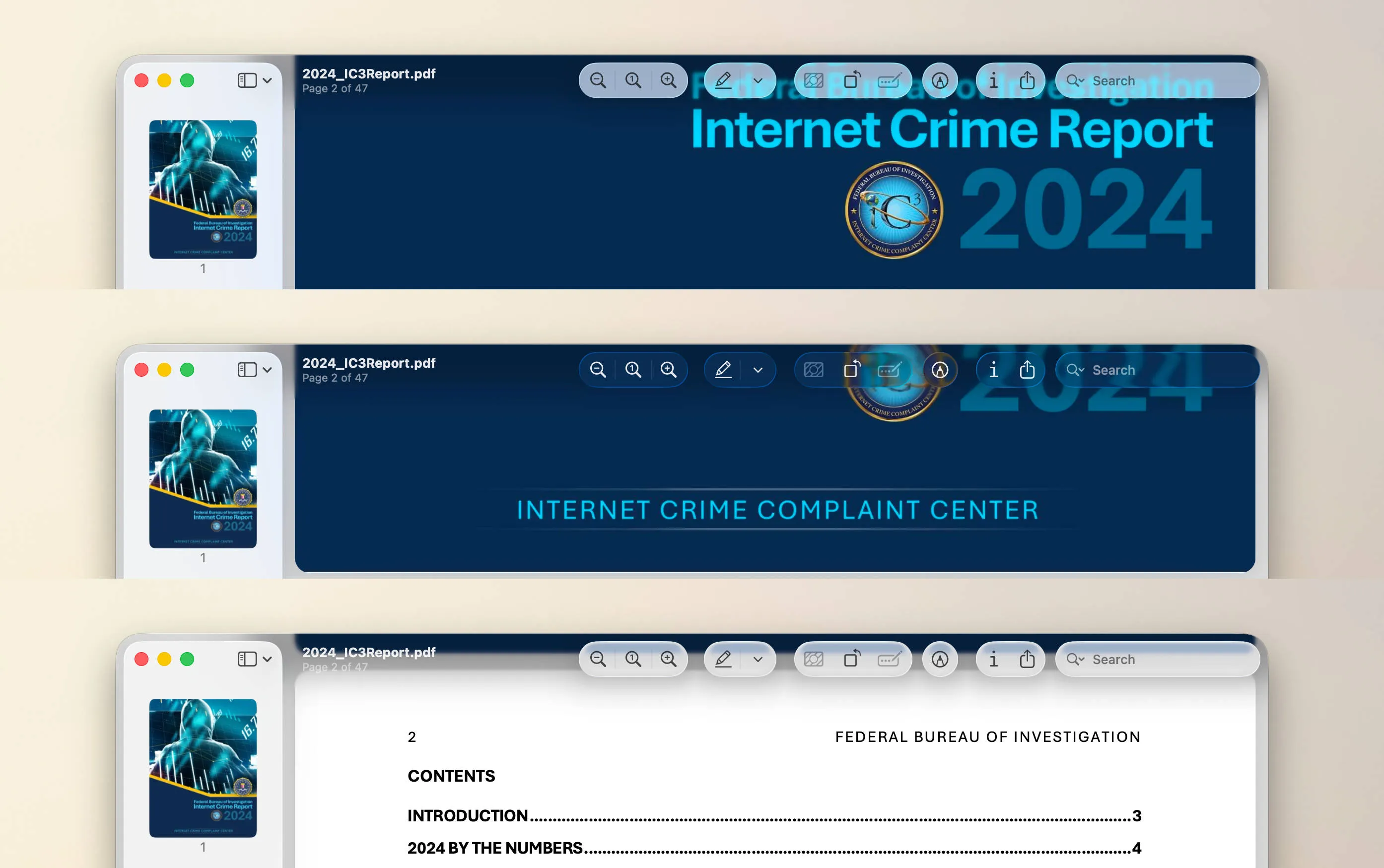
To point out just a few of the issues here:
- All the pill shapes in the toolbar create negative space between them that makes the UI look busier than it would be with a single toolbar
- Page elements get distorted as the user scrolls
- The whole color scheme of the toolbar changes while scrolling, but with a bit of delay to make it extra attention-grabbing
The last point in particular is baffling. As you scroll through a document or website, you see seemingly random motion in the corner of your eye, drawing your attention away from the content.
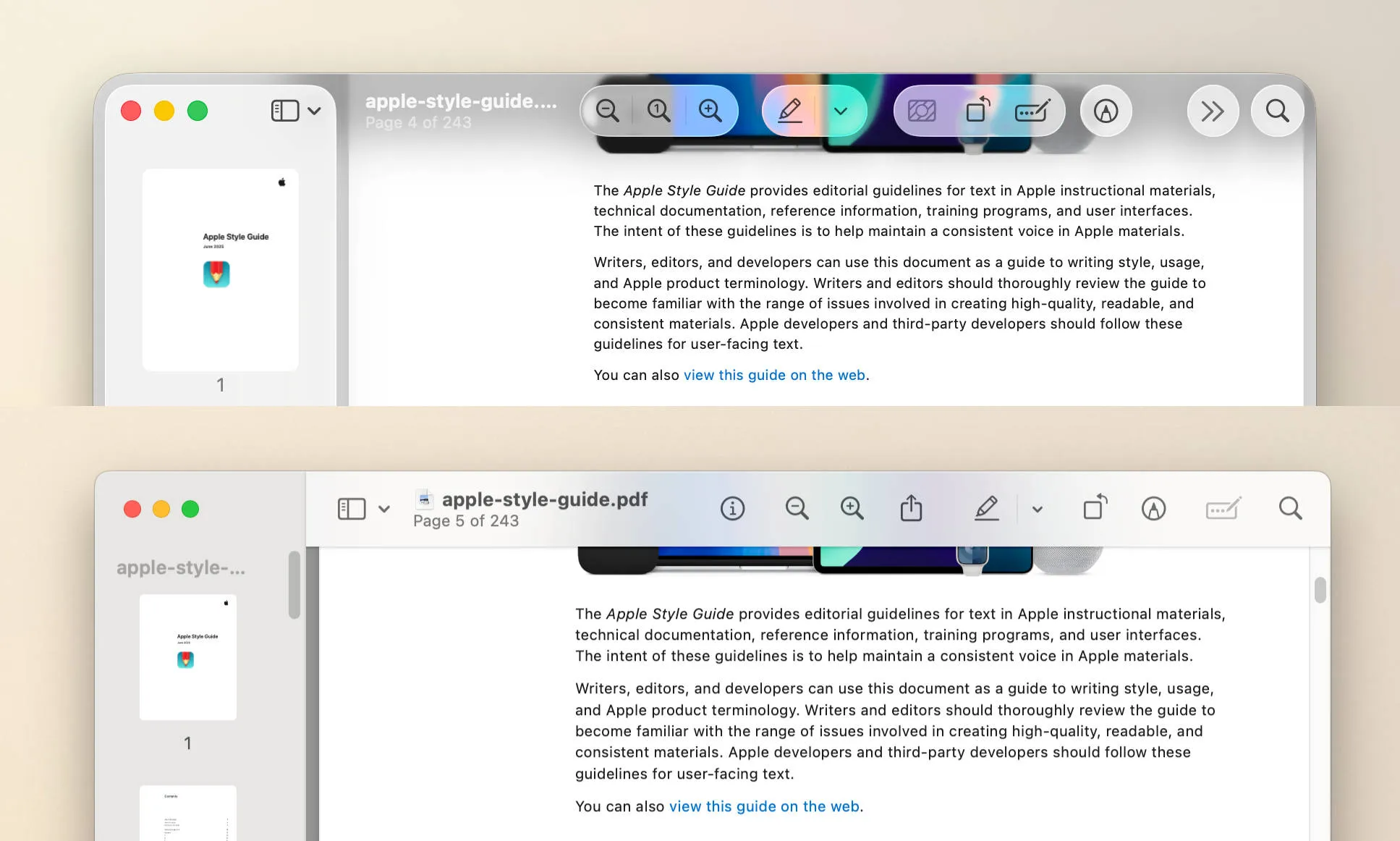
Compare this to the UI in macOS 15.
Sloppiness
Sloppy design happens when you try to solve systemic issues at a local level. You are treating the symptoms, rather than the disease. The blinking toolbar I mentioned above is a great example of this: Because everything is transparent, UI elements might get unreadable depending on the background, and instead of, say, lowering the translucency, we get this mess.
Another example of this is the weird blurred box at the top of the window.
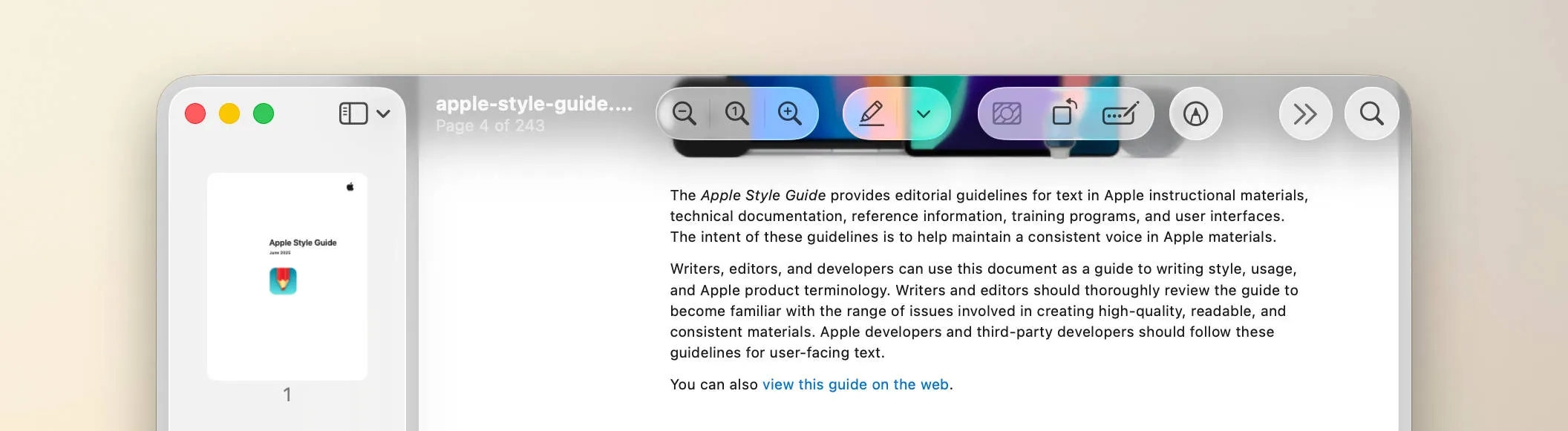
This just baffles me. Clearly, the intent here has been to improve the legibility of the toolbar, but why does this box extend halfway into the sidebar? If you have to use gradients like this, at least extend them all the way across the window so that there isn’t yet another awkward shape in an area that is already full of awkward shapes.
Who thought that this was an adequate solution? And who approved it as good enough to go into production? For a company that loves to put the adjective “meticulous” into every other sentence, this is simply not good enough.
There might still be hope
Clearly, I’m not happy with Liquid Glass. This might be the first generation of OS updates that I will entirely skip on my personal machines since OS X Panther. But having used Apple devices and operating systems for such a long time also gives me a little bit of hope. iOS 7 was a disaster in terms of legibility, because they have choosen to set the global font weight to ultra-thin. Even the first versions of OS X were full of unnecessary transparency, pinstriped backgrounds and heavy drop shadows.
Things clearly can improve over time, but it is still always disheartening to see something quite solid thrown out in favor of something so sloppy and ill-considered.
For the time being, my personal devices will stay on the previous versions. On my work devices, the “reduce transparency” accessibility section fixes some of the worst issue. It doesn’t look pretty in any way shape or form, but at least I can see what I’m doing.
Do better, Apple.